Unlock this content with a Rosendale Online subscription.
Get unlimited access to all of Rosendale Online.
Already a Rosendale Online member?
Log in
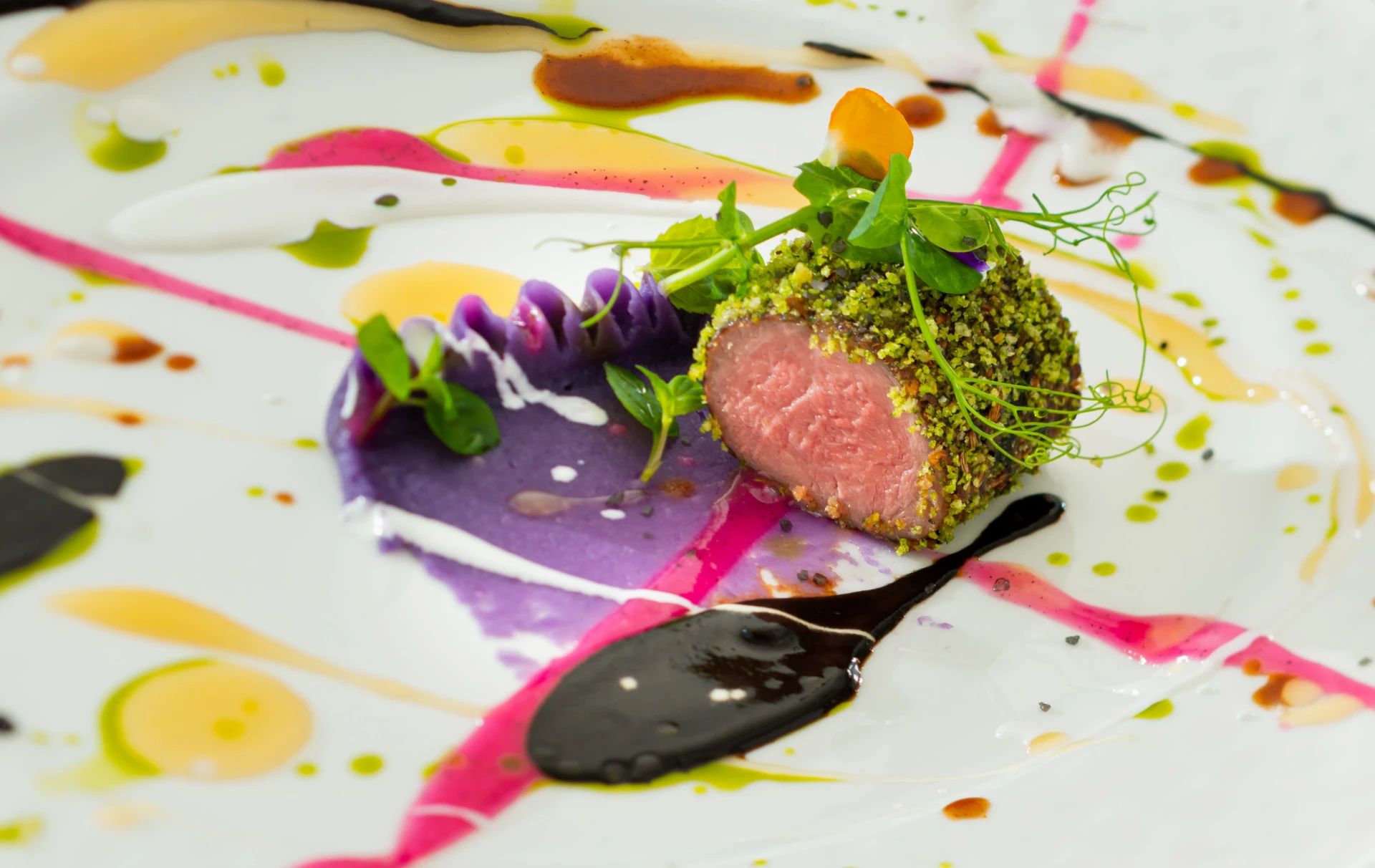
The Hawaii Food & Wine Festival was one of the most fun events we've ever participated in. 2019 was our second year doing the VIP dinner, and for the festival’s final event, we wanted to have fun while creating a piece of edible art packed with exciting, surprising flavors.
We were tasked with creating one dish for the festival dinner's five-course menu. Surrounded as we were by incredible chefs Mike Bagale, Mathew Peters, Richard Rosendale, Andrew Sutton and Sherry Yard, standards were undoubtedly high. Our first challenge was to pack more than 30 different flavor profiles into a mere 5 ounces. Next up—plating. Here we drew inspiration from our collaboration class we held with the “Culinary Picasso” Yann Bernard Lejard, which was one our best classes to date. We were also challenged to highlight local Hawaiian flavors, so we combined the beautiful flavor of lamb with 10 culturally influenced spices. And the final touch? The sweet, bright-pink dragon fruit sauce with fresh mango that tied it all together, which dressed the dish with dazzling fuchsia and unmistakable flavor.Lamb might not be the most popular meat around; its lack of widespread appeal may be attributed to generations of people being raised on more conventional meats and being unaccustomed to lamb's intense meatiness. Its strong flavor needs pungent seasonings with robust flavor profiles to tame it and make it enjoyable. We found that we achieved the best results when cooking lamb seasoned with a variety of sweet, spicy and savory flavors that enhance its uniquely delicious flavor qualities.

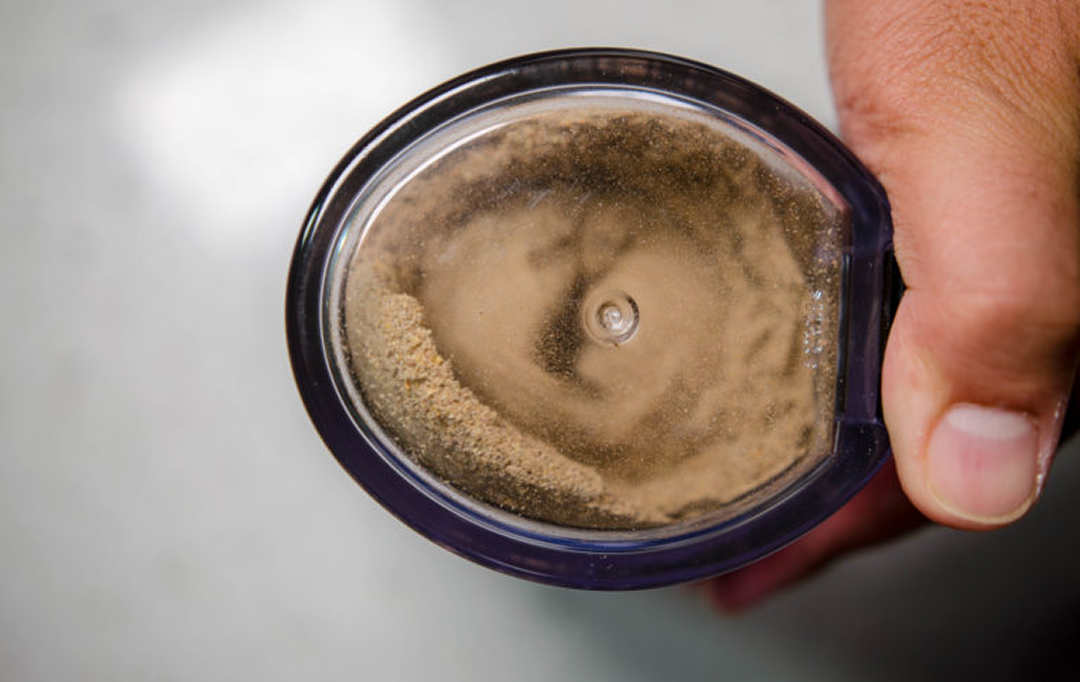
Lamb Seasoning
Step 1
Carefully place ingredients into a coffee grinder and process until you have a course spice mix. Do not over-grind, as the spice mixture should have some texture and not be pulverized to a powder. Repeat the process as many times until the spices are combined into a course spice mix. Set aside until needed.
Lamb Crust-Herb Persillade
Step 1
1. Place all ingredients into a Robot Coupe container and process until the color is vibrant green.
2. Dry crust out in a hot pan until crisp or in the oven at 212 degrees F/100 degrees C for about 15–20 minutes. Set aside until needed.
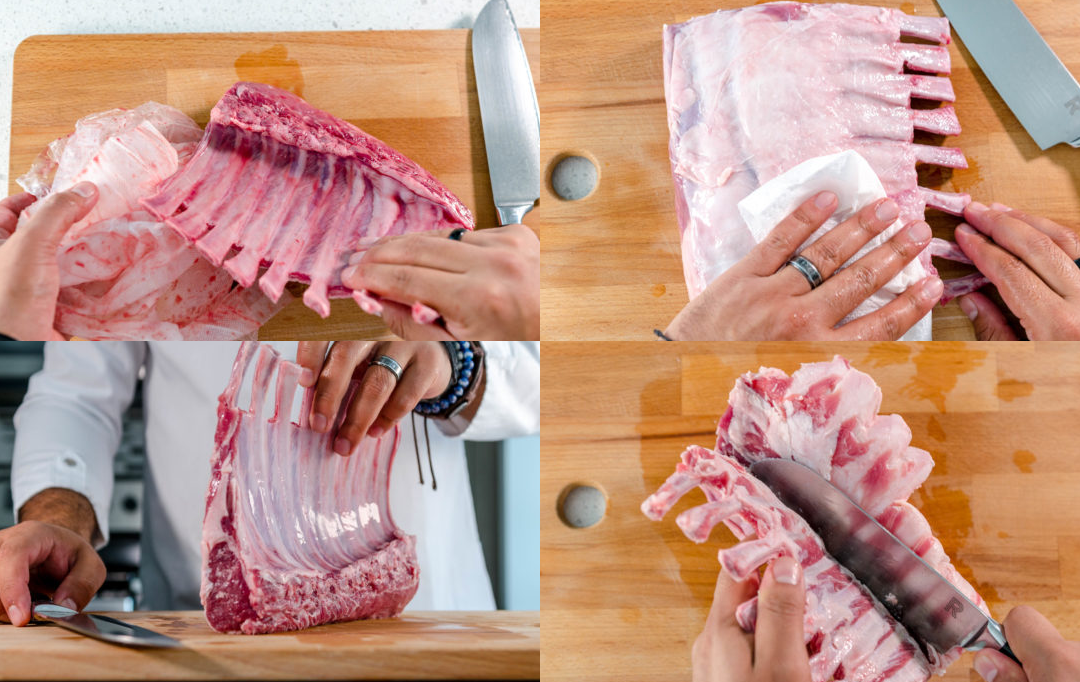
Step 1
Open the bag and carefully remove the lamb rack.
Step 2
Using paper towels, dry off excess lamb blood.
Step 3
Stand the lamb rack up to secure it before cutting.
Step 4
Cut as close to the bone as you can to glean as much meat as possible.
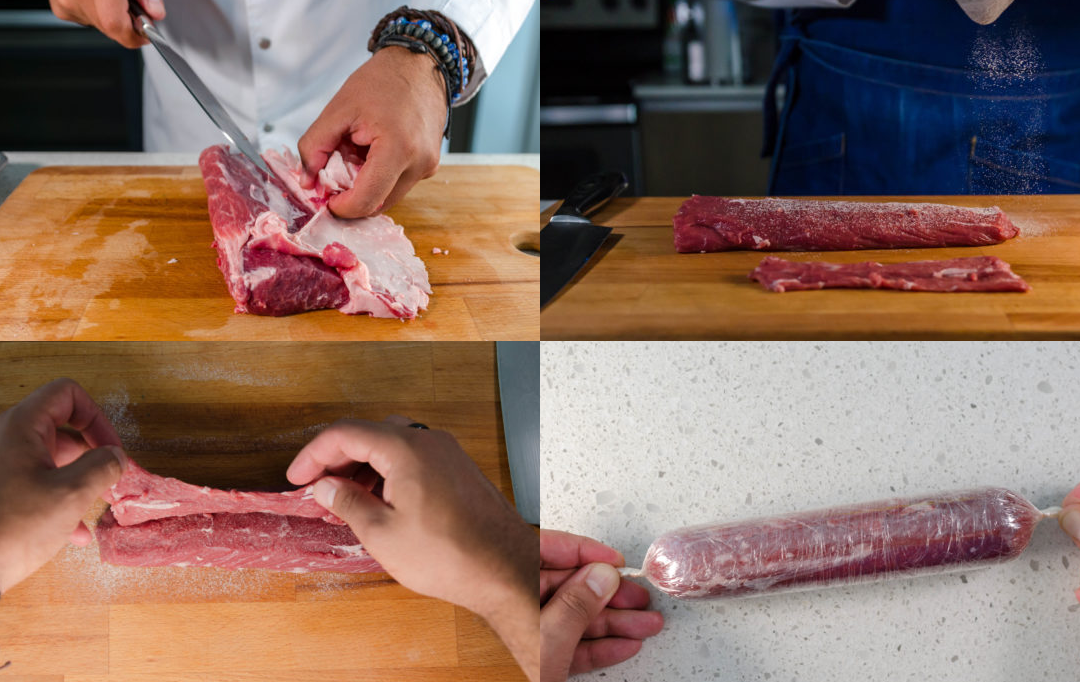
Step 5
With a Santoku or chef's knife, cut off the excess fat for a clean loin, leaving only a few spots of fat that will eventually melt later.
Step 6
Clean the small muscle, removing as much fat as you can, and set aside for next steps. Dust enough Activa RM Transglutaminase on the pieces of meat to create a thin coating on each side. Repeat the process for both pieces of meat.
Note: Transglutaminase is a naturally occurring enzyme in plants, animals and bacteria. Enzymes are proteins that act as catalysts in chemical reactions; they speed up these reactions and in some cases cause reactions to occur that otherwise wouldn’t.
Activa RM Transglutaminase bonds protein molecules together with a very strong covalent bond by linking the amino acids glutamine and lysine.
Step 7
Make sure the small piece of meat is covering the part that was removed from the loin.
Step 8
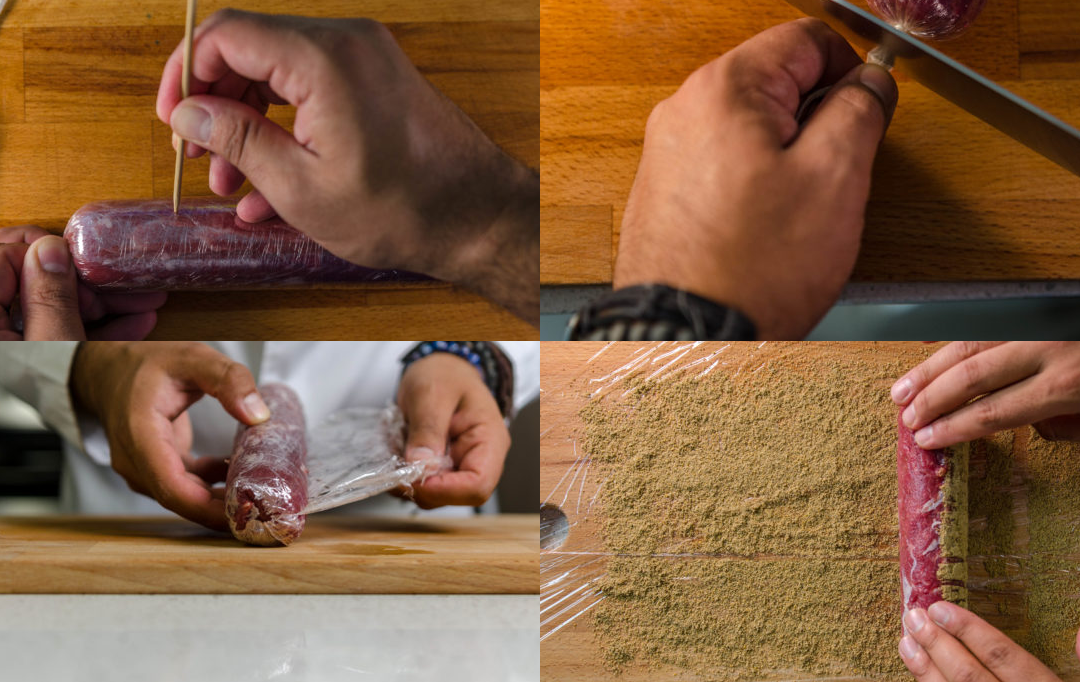
Start rolling the loin with the plastic wrap forming a cylinder shape. Hold the sides of the plastic wrap, making sure you wrap it very tight.
Step 9
Using a cake tester, punch all around the lamb loin to release any air pockets that may have occurred during rolling.
Step 10
Tie both sides of the loin with a twist-tie made from plastic wrap. Cut off the excess plastic wrap.
Allow the lamb to rest in the freezer for about 2–3 hours.
Step 11
Place a sheet of fresh plastic wrap on your workstation and coat evenly with the lamb seasoning made in the previous step. Remove lamb from freezer, and remove its plastic-wrap casing.
Step 12
Season the lamb with kosher salt, then roll in the spice mixture.
Preheat a cast-iron skillet. Once skillet is hot, add olive oil and heat to 350 degrees F/176.7 degrees C. When the oil is hot enough, sear the lamb loin on every side of its surface.
Step 13
Once it is fully seared, let lamb cool to 40 degrees F/4 degrees C or below.
Place the lamb loin into a pouch bag (vacuum bag) and vacuum-pack it in a vacuum packaging machine.
Step 14
Let vacuum-packed lamb rest overnight in the freezer.After letting it rest overnight, remove the lamb from the freezer and allow to defrost.
Fill a Cambro or other similar large container with water and set up an immersion circulator to 135 degrees F/57 degrees C. Meanwhile, defrost the lamb.
Once the lamb is defrosted and the water bath reaches 135 degrees F/57 degrees C, drop the lamb loin inside and let it cook for 45 minutes.
Step 15
Place prepared herb persillade in a flat dish or wide, shallow bowl. Once lamb loins are completely cooked, roll them in the herb persillade crust, coating as evenly as possible.
Cut loins into desired portions and keep warm. (Optional: keep loins warm in a cast-iron pan, as shown in picture.) Serve as soon as possible.