Unlock this content with a Rosendale Online subscription.
Get unlimited access to all of Rosendale Online.
Already a Rosendale Online member?
Log in
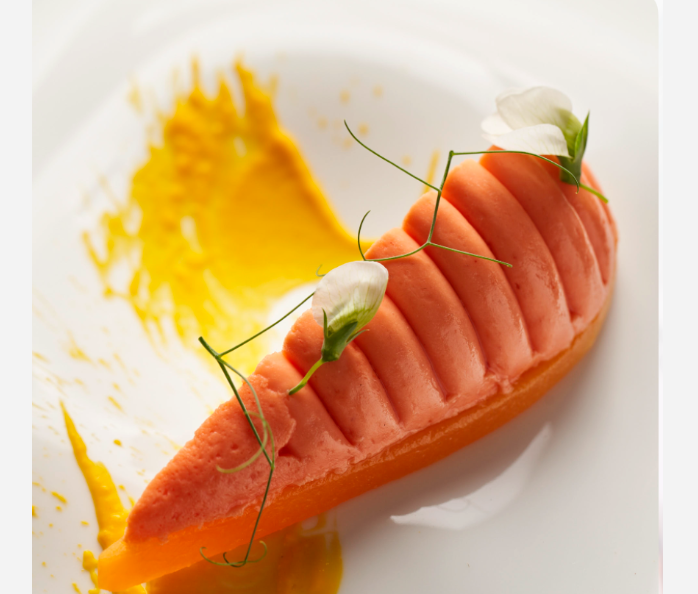
Indulge in the rich, delicate flavors of lobster, a timeless symbol of luxury dining and coastal cuisine.
This experience highlights the versatility and elegance of lobster, from classic preparations to modern interpretations. Learn essential techniques for selecting, preparing, and cooking lobster to perfection, while exploring flavors that enhance its natural sweetness and elevate every dish.

Shrimp Mousse
Step 1
Dice shrimp; chill 10–15 minutes until firm but not frozen (28–32°F surface temperature).
Step 2
Process shrimp with salt (3 g) until tacky and cohesive.
Step 3
Add egg white; process until incorporated.
Step 4
Stream in cold heavy cream gradually to form smooth emulsion, keeping mixture below 40°F.
Step 5
Pass through fine tamis if ultra-smooth texture is desired.
Step 6
Fold in dill and lobster brunoise.
Step 7
Hold at 32–38°F until assembly.
Lobster Blanching & Moisture Control
Step 1
Bring water to 203–208°F. Blanch claws 1 min 30 sec and tails 1 min to set pigment while maintaining a raw interior.
Step 2
Shock immediately in ice bath until internal temperature drops below 40°F.
Step 3
Shell and remove cartilage carefully.
Step 4
Vacuum seal lobster meat with an absorbent towel; refrigerate 1 hour to remove surface moisture. Discard towel before processing.
Step 1
Chill Robot Coupe bowl and blade.
Step 2
Process lobster meat and coral 8–10 minutes until smooth and vividly red, scraping bowl frequently. Maintain mixture below 40°F.
Step 3
Add raw shrimp; process until tacky and beginning to bind.
Step 4
Add salt (8 g); process 30–45 seconds to activate myosin extraction.
Step 5
With motor running, add whole egg, then stream in cold heavy cream to form a stable emulsion. Keep mixture below 40°F.
Step 6
Season with white pepper and brandy.
Step 7
Lightly dust with Activa RM (1 g) and pulse briefly to distribute evenly; do not overwork.
Transfer to piping bag and hold at 32–38°F.
Step 1
Slice squash into ¼-inch sheets for uniform compression.
Step 2
Vacuum seal with apple cider, vinegar, thyme, and coriander.
Step 3
Cook sous-vide at 183°F for 1 hour 30 minutes until tender but structurally intact.
Step 4
Shock in ice bath and chill completely.
Step 5
Trim to precise oval bases matching lobster tail dimensions.
Lobster Tail Formation
Step 1
Position lobster tail mousse over sous-vide squash base.
Step 2
Slice lengthwise with a warm slicing knife for clean cross-section if required.
Step 3
Brush lightly with reduced lobster stock glaze immediately before service.
Step 4
Finish with restrained herb garnish and controlled accent elements.
Final Assembly & Plating
Step 1
Pipe lobster mousse into ¾-inch food-safe vinyl tubing, eliminating air pockets. Secure ends with elastic bands.
Step 2
Poach at 170°F until internal temperature reaches 149°F (approximately 3 minutes) and cylinders are set.
Step 3
Shock briefly in ice bath to stabilize; remove from tubing and trim cleanly.
Step 4
Line cylinders into heat-resistant silicone lobster tail molds, aligning to form natural curvature and ribbing.
Step 5
Fill remaining cavity with shrimp mousse, packing firmly to eliminate voids; level flush.
Step 6
Steam at 149°F for 8–12 minutes until internal temperature reaches 140–144°F.
Step 7
Rest 5 minutes before unmolding to allow proteins to relax and set.