Unlock this content with a Rosendale Online subscription.
Get unlimited access to all of Rosendale Online.
Already a Rosendale Online member?
Log in
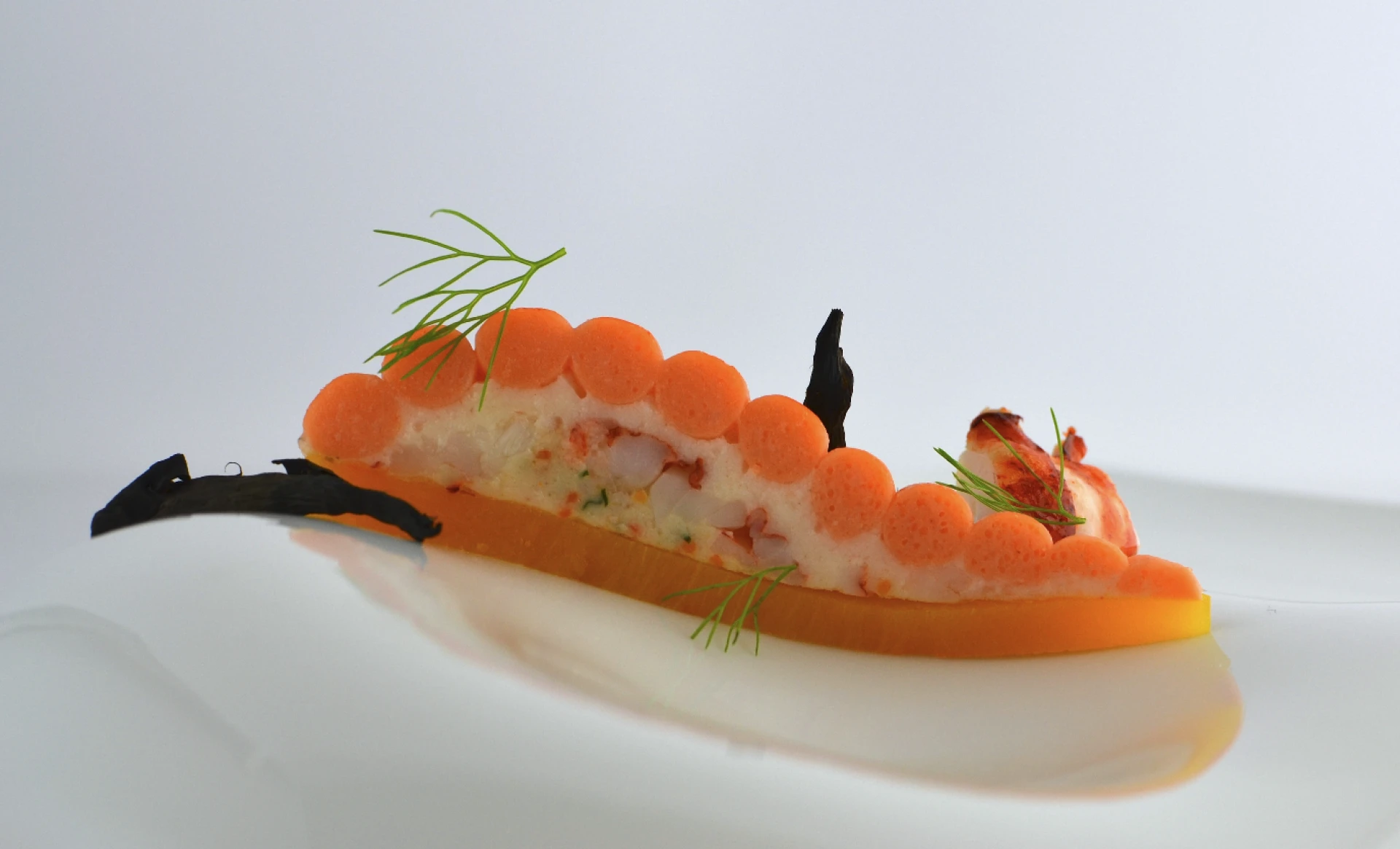
This is the lobster course Chef Richard Rosendale presented during the 2013 Bocuse d’Or in Lyon.
It was a preparation that drew the attention of veteran competitor Rasmus Kofoed for its structural precision and technical clarity. Sculpted to resemble a lobster tail, the dish highlights disciplined forcemeat technique and the controlled blanching of lobster to extract vivid shell pigmentation before emulsification. The mousse is piped into vinyl tubing, gently poached, assembled in a custom silicone mold, and mounted over sous-vide butternut squash to balance richness with acidity and structural stability. The yield is 14 portions.
Step 1
Bring water to 203–208°F (95.0–97.8°C). Blanch lobster claws for 1 minute 30 seconds and tails for 1 minute to set pigment while keeping the interior raw.
Step 2
Shock immediately in an ice bath until internal temperature drops below 40°F (4.44°C). Shell carefully and remove cartilage.
Step 3
Vacuum seal lobster meat with an absorbent towel and refrigerate 1 hour to remove excess surface moisture. Discard towel before processing.
Step 1
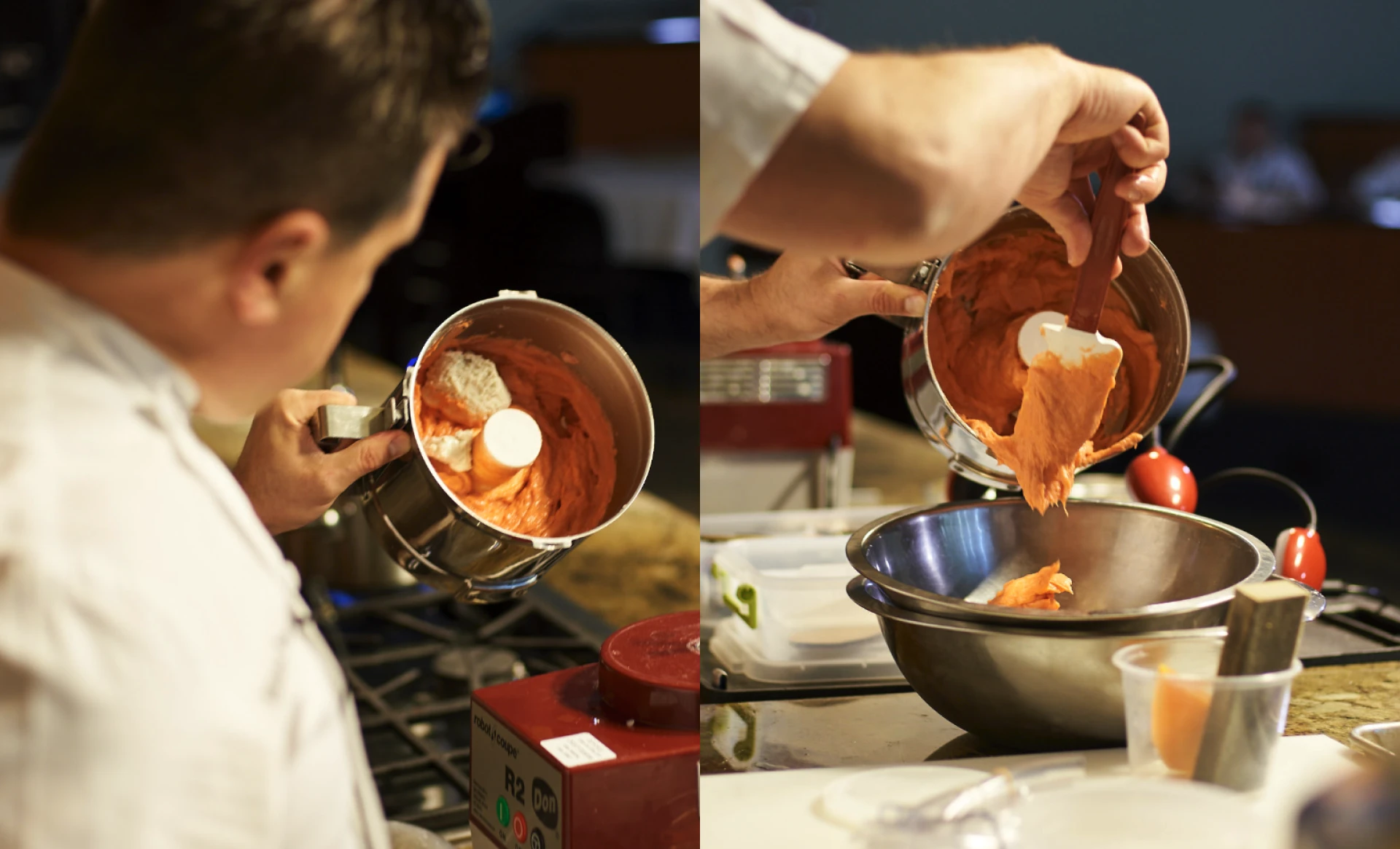
Process chilled lobster meat and coral in a cold food processor 8–10 minutes until smooth and vividly red. Scrape bowl frequently to ensure uniform extraction.
Step 2
Add raw shrimp and process until tacky and beginning to bind. Maintain mixture below 40°F (4.44°C).
Step 3
Add salt (5 g) and process 30–45 seconds to activate myosin extraction.
Step 4
With motor running, add egg followed by cold heavy cream in a steady stream to form a stable emulsion. Do not allow mixture to exceed 40°F (4.44°C).
Step 5
Season with white pepper and brandy.
Step 6
Apply a light dusting of Transglutaminase (approximately 2 g) and pulse briefly to distribute evenly. Do not overwork.
Step 7
Transfer to piping bag and hold at 32–38°F (0–3.33°C).
Step 1
Place the shrimp, cream, egg white and salt in a Paco Jet beaker. Freeze solid.
Step 2
Pacotize until smooth.
Step 3
Transfer to a mixing bowl and fold in the dill and chopped lobster meat.
Step 4
Hold cold at 32–38°F (0–3.33°C) until assembly.
Step 1
Slice squash into1/4-inch sheets for uniform compression.
Step 2
Vacuum seal with apple cider, vinegar, thyme, and coriander.
Step 3
Cook sous-vide at 183°F (83.89°C)for 1 hour 30 minutes until tender but structurally intact.
Step 4
Shock in ice bath and chill completely before trimming to mold dimensions.
Step 1
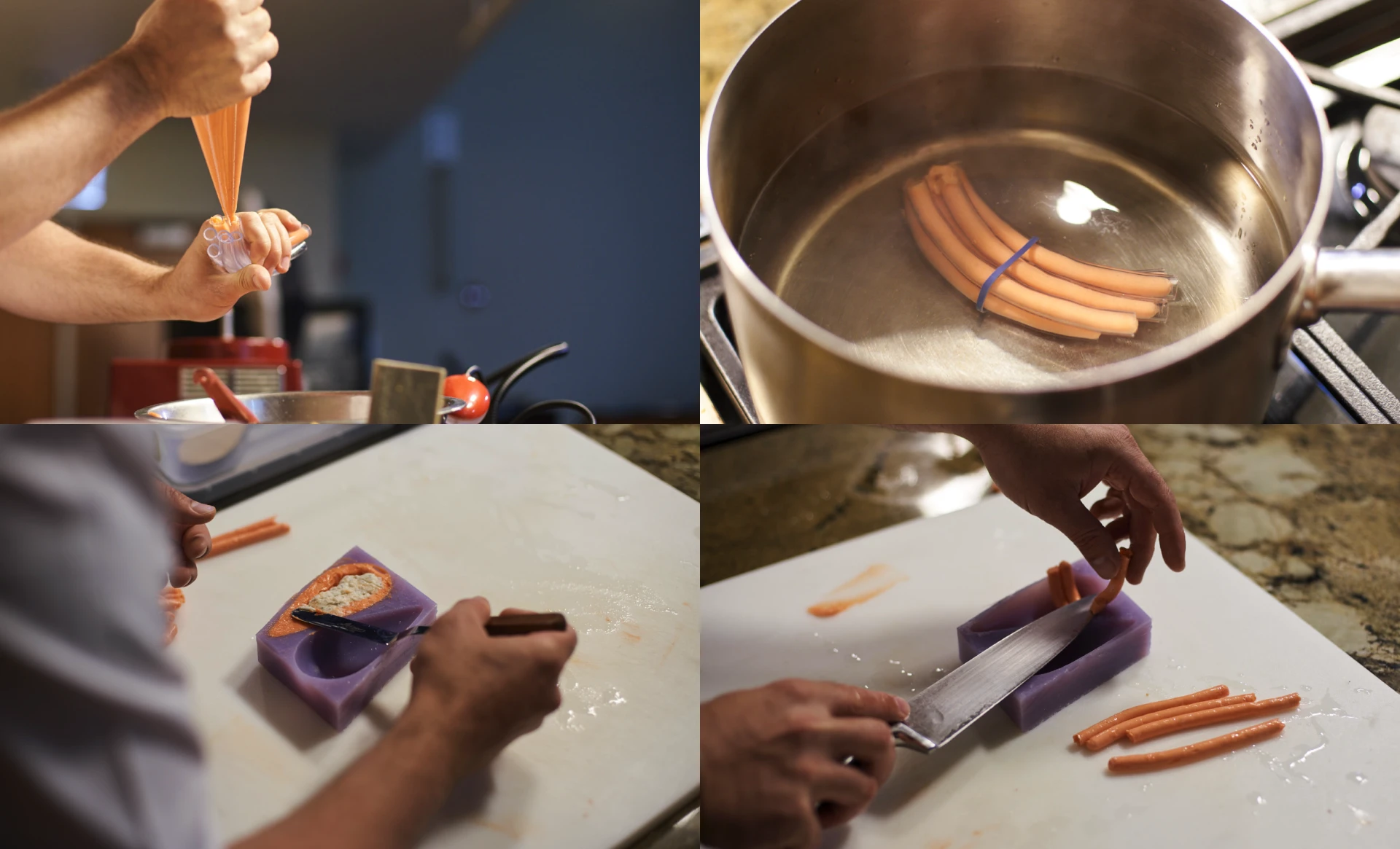
Pipe lobster mousse into 3/4-inch vinyl tubing, eliminating air pockets. Secure ends with elastic bands.
Step 2
Poach at 170°F (77°C) for approximately 3 minutes, until set.
Step 3
Shock briefly in ice water to stabilize structure. Remove cylinders from tubing and trim cleanly.
Step 4
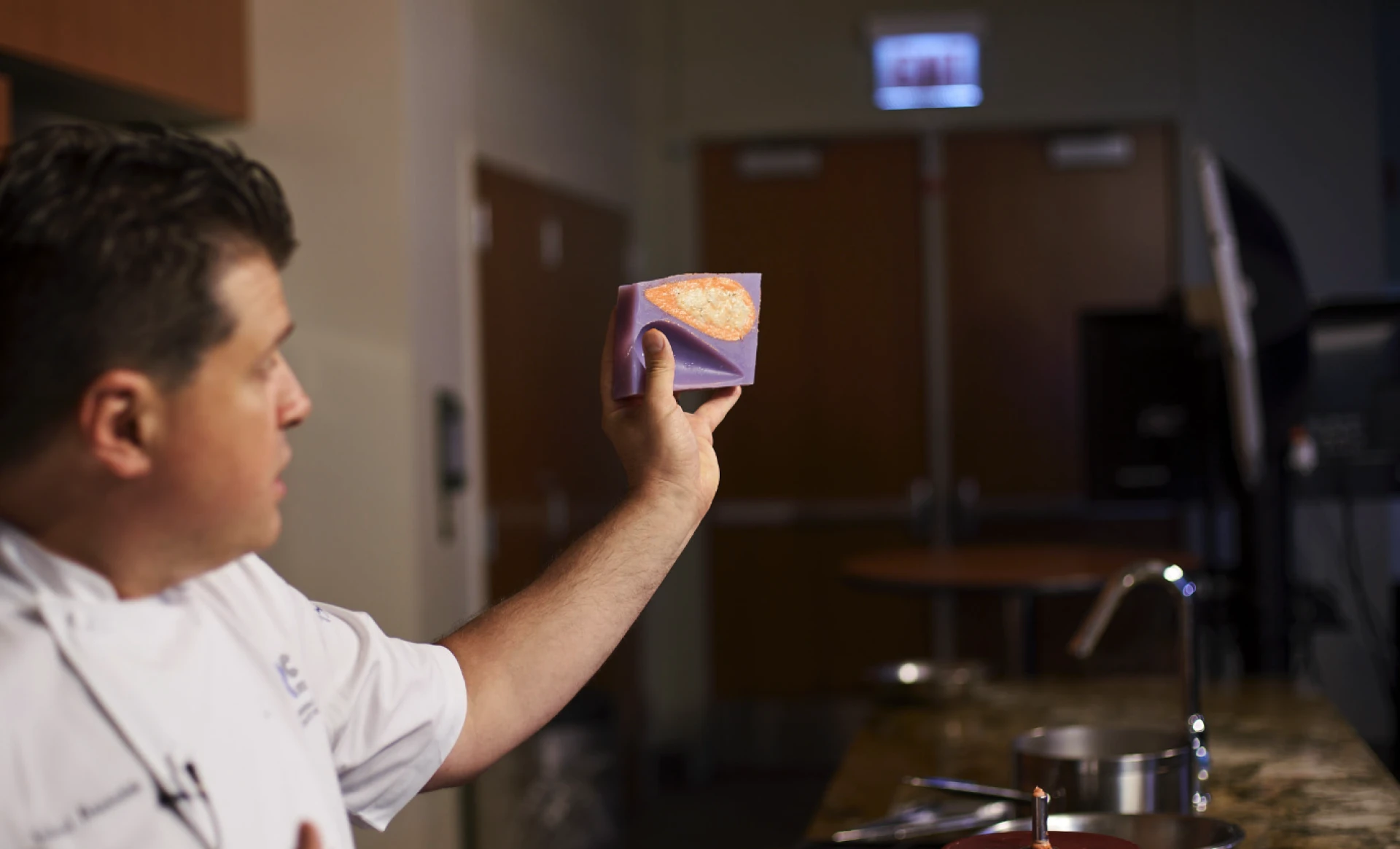
Line cylinders into silicone lobster tail molds, aligning for natural curvature and defined ribbing.
Step 5
Fill remaining cavity with shrimp mousse, packing firmly to eliminate voids. Level flush with mold.
Step 6
Steam at 149°F for 8–12 minutes until internal temperature reaches 140–144°F (60.00–62.22°C).
Step 7
Rest 5 minutes before unmolding to allow proteins to relax and set.
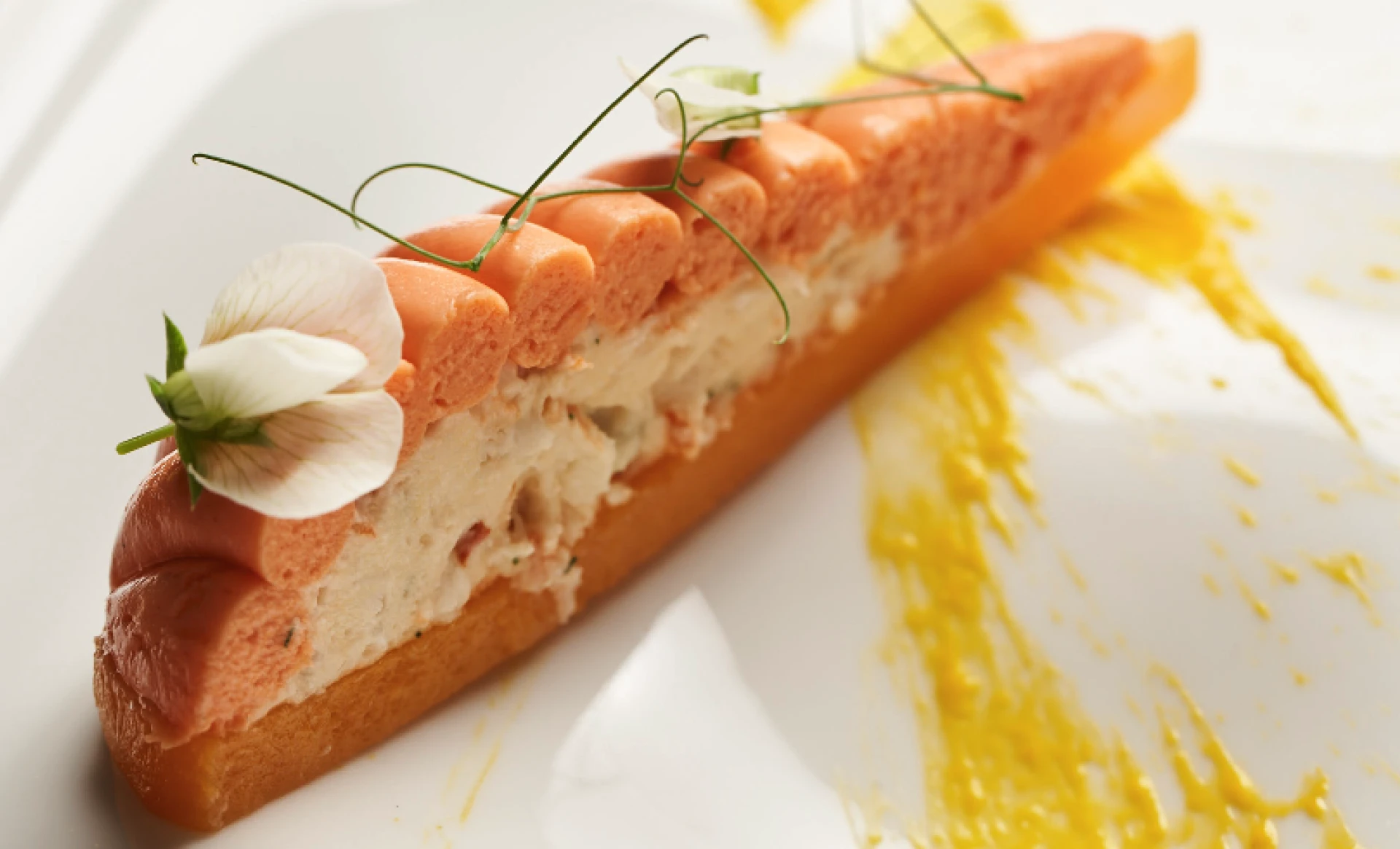
Step 1
Trim sous-vide squash to precise oval base matching tail length.
Step 2
Position lobster tail mousse over squash foundation.
Step 3
Slice lengthwise with a warm slicing knife for a clean cross-section when required.
Step 4
Brush lightly with reduced lobster stock glaze immediately before service.
Step 5
Finish with restrained herb garnish and controlled accent elements.